Early generative computer art. São Paulo, 1984-1987.
In the mid-1980s, before personal computers became part of everyday visual culture, I began writing software to generate images.
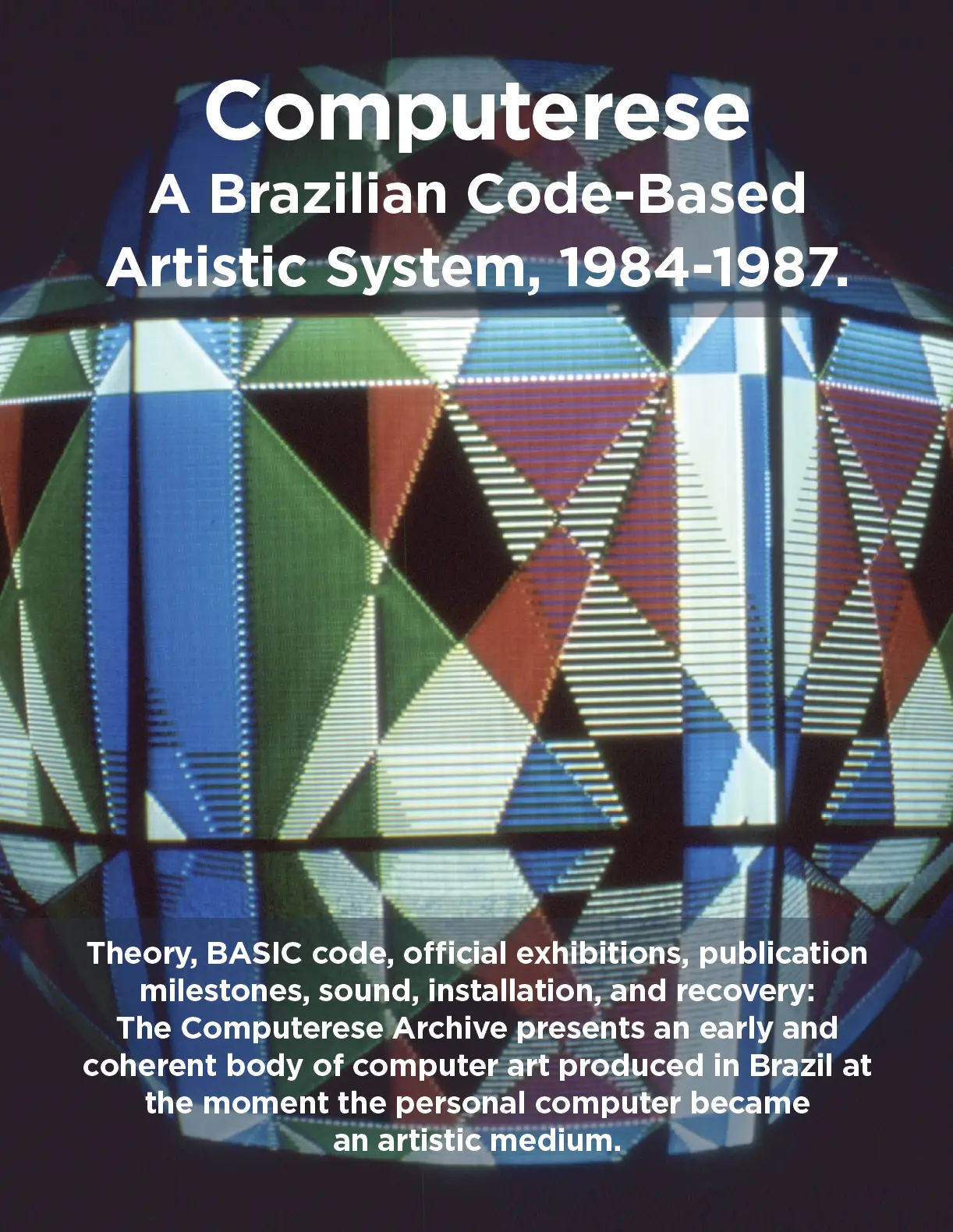
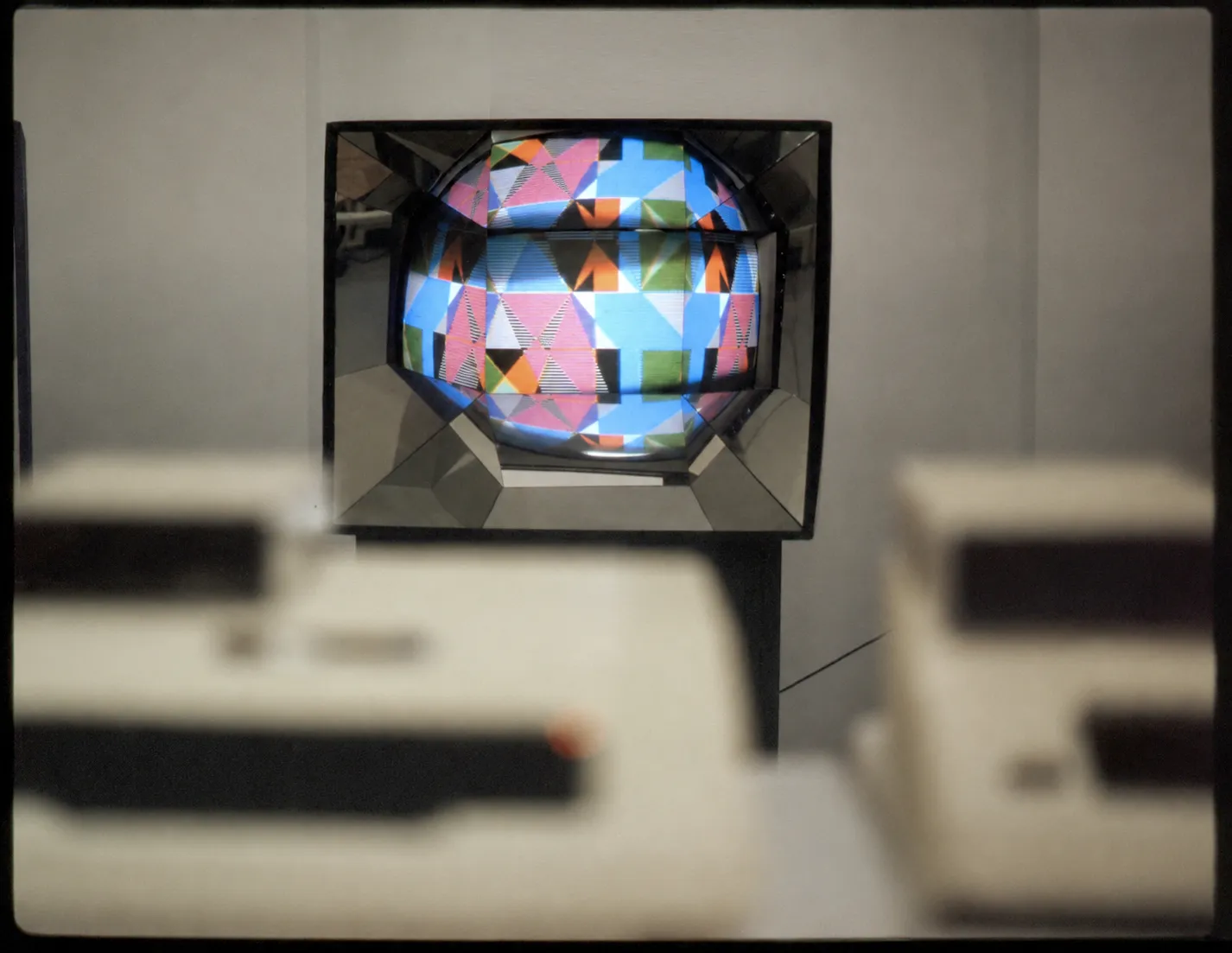
The result was Computerese: a body of work created with BASIC programs, executed on microcomputers, and exhibited in São Paulo between 1984 and 1987.
Each work was not a fixed image, but a generative system - code capable of producing a new visual variation each time it ran.
Background: COLCHA 2, São Paulo, 1986. Generative image produced by software written in BASIC. Emulated execution video included below.
View Selected Works Portfolio View Archive PacketThe Archive Packet includes chronology, documentation, and inventory preview.

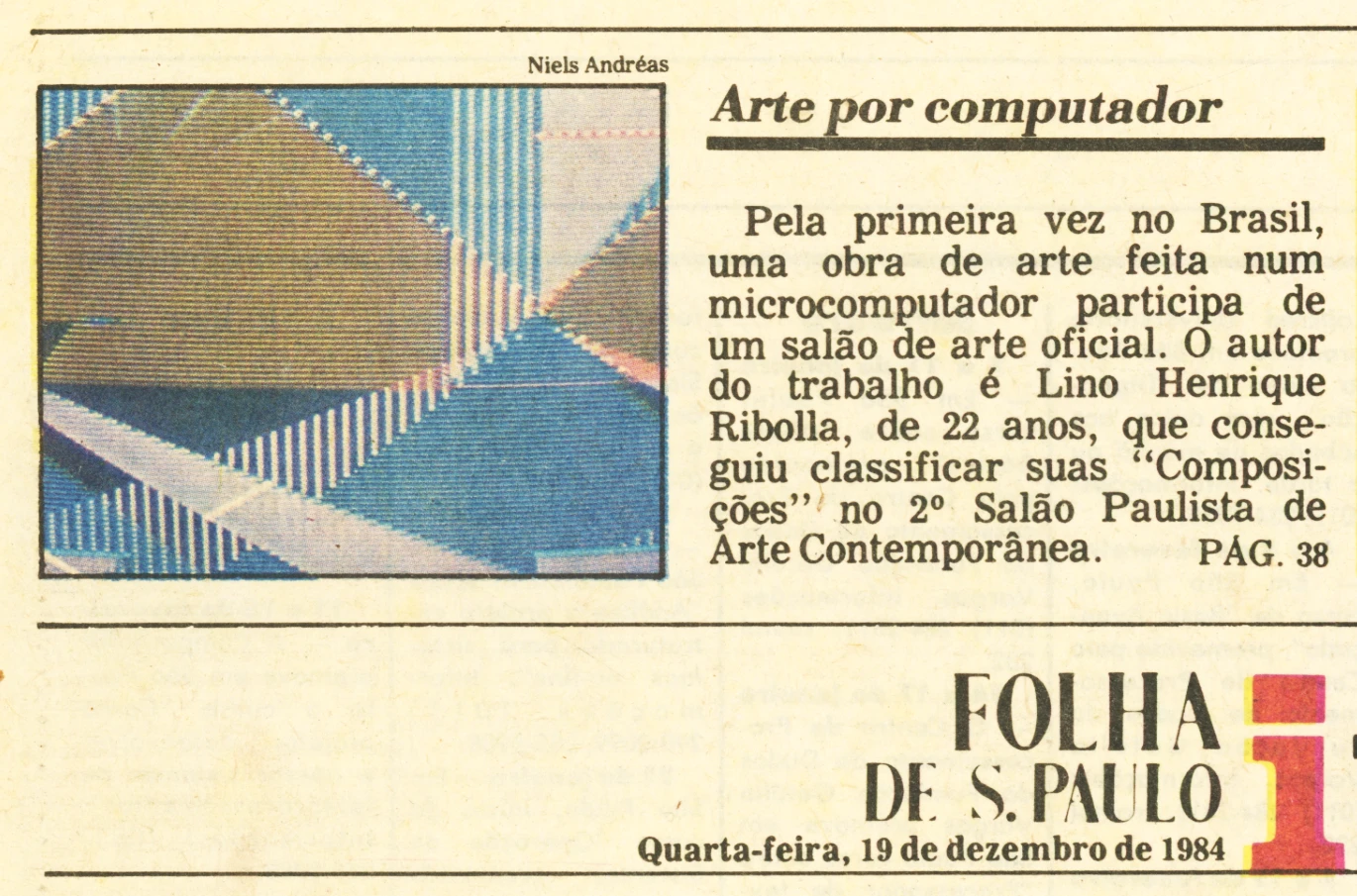
The archive brings together artworks, source code, exhibition records, press documentation, theoretical writing, and surviving photographic evidence from that period.
Computerese belongs to an early moment in Brazilian computer art, when artists were beginning to explore the personal computer as a creative instrument and software as a visual language.
Today, as generative systems have become central to contemporary visual culture, Computerese offers a historically grounded record of an earlier encounter between code, image, and art.
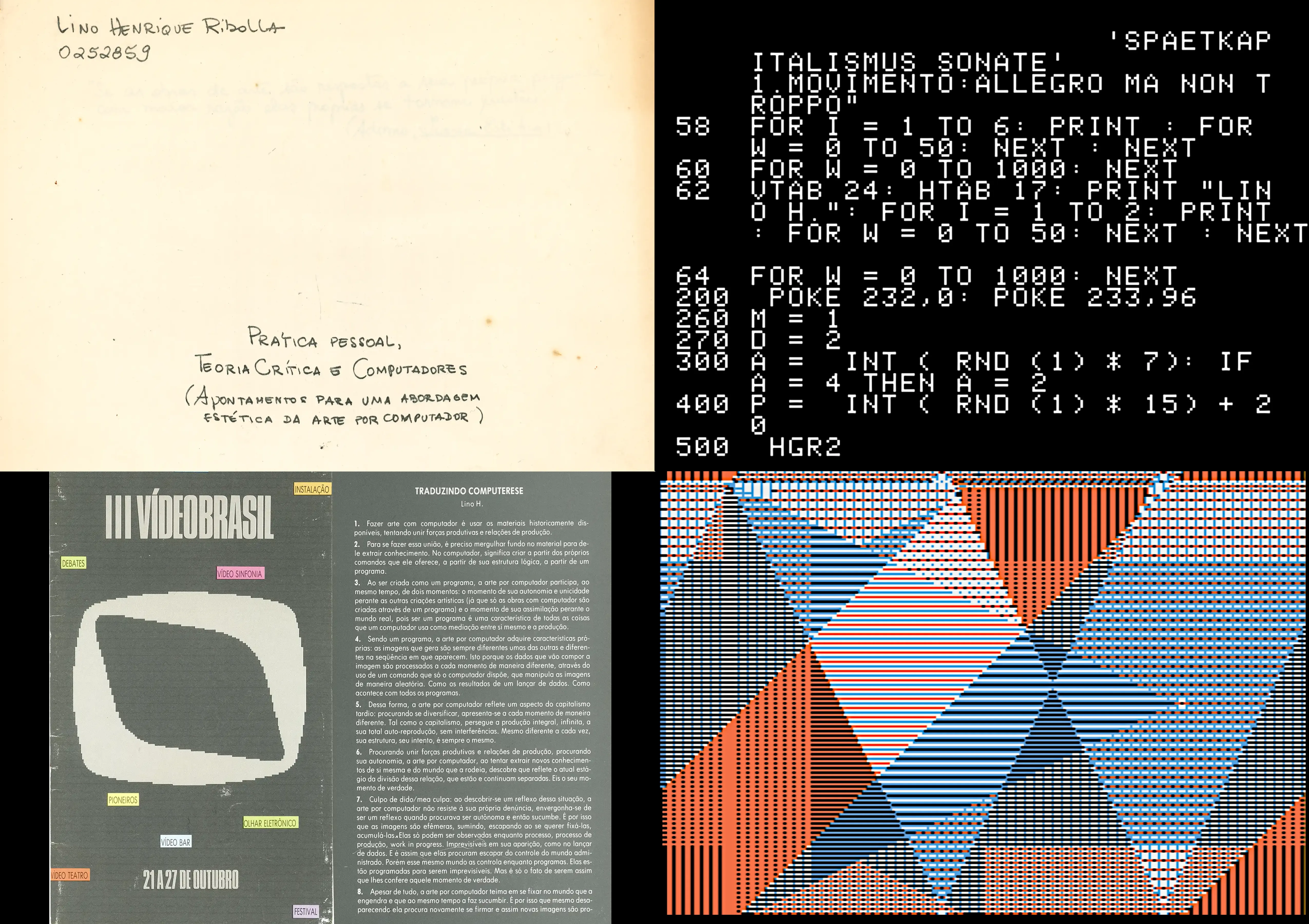
Computerese did not produce fixed images. Each program defined a visual system, and each execution could generate a new variation. The reconstruction beside it demonstrates this procedural logic.
Emulated execution of the original COLCHA 2 BASIC program, captured in Virtual ][. This is not original audiovisual footage from the 1980s, but a contemporary capture of the preserved code in operation. The recording demonstrates the work’s generative logic: the code progressively produces the image with each execution.

The archive documents both the works and the evidence around them.
It includes generative images, BASIC programs, exhibition records, press materials, academic writing, photographic documentation, chronology, and inventory materials.
Together, these elements position Computerese not only as a group of early computer-generated images, but as a documented artistic practice connected to the context of contemporary art and art-and-technology in 1980s Brazil.

An institutional review packet is available for museums, cultural institutions, archives, curators, scholars, and research partners.
The packet includes selected works, chronology, documentation highlights, and a preview of the archive structure. Additional materials, including high-resolution images, complete scans, source code, translations, and technical files, can be made available upon request.

I am currently seeking conversations with institutions and curators interested in the preservation, exhibition, study, historical contextualization, and possible institutional pathways for The Computerese Archive.
Lino Ribolla
Artist / Creative Director / Professor of Advertising and Branding at SCAD